Atyfen was established in 2012 and it has 100 employees across all of its locations and generates $27.72 million in sales, according to a 2021 report from Arij, a news outlet.1 Since January 2013, its fishmeal and fish oil factory has operated in the industrial zone of Bountiya in Nouadhibou. Employees from Atyfen mentioned in a focus group discussion that they had become sick from the strong smell coming from the machines during operations in the fishmeal and fish oil factory, according to the 2023 “Track The Fish” report.2 Atyfen was among the worst violators of Mauritania’s annual fishmeal production quota of 2,000 tons, producing 10,633 tons of fishmeal in 2017, as reported in a 2022 documentary produced by Arte TV.3
Habibin Yavuz: Atyfen holds the fishing rights associated with the vessel Habibin Yavuz, according to the Fisheries Transparency Initiative.4 In 2021, Mauritania authorized the vessel to fish for small pelagics in an area usually reserved for artisanal fishing. This area was near the Banc d'Arguin National Park, a marine protected area. The authorization was seen by the Coalition for Fair Fisheries Arrangements as a threat to both the local fishing industry and the environment, especially since the vessel was supplying fishmeal factories.5 The fishing zone, designated as “A zone,” was previously reserved for artisanal boats.
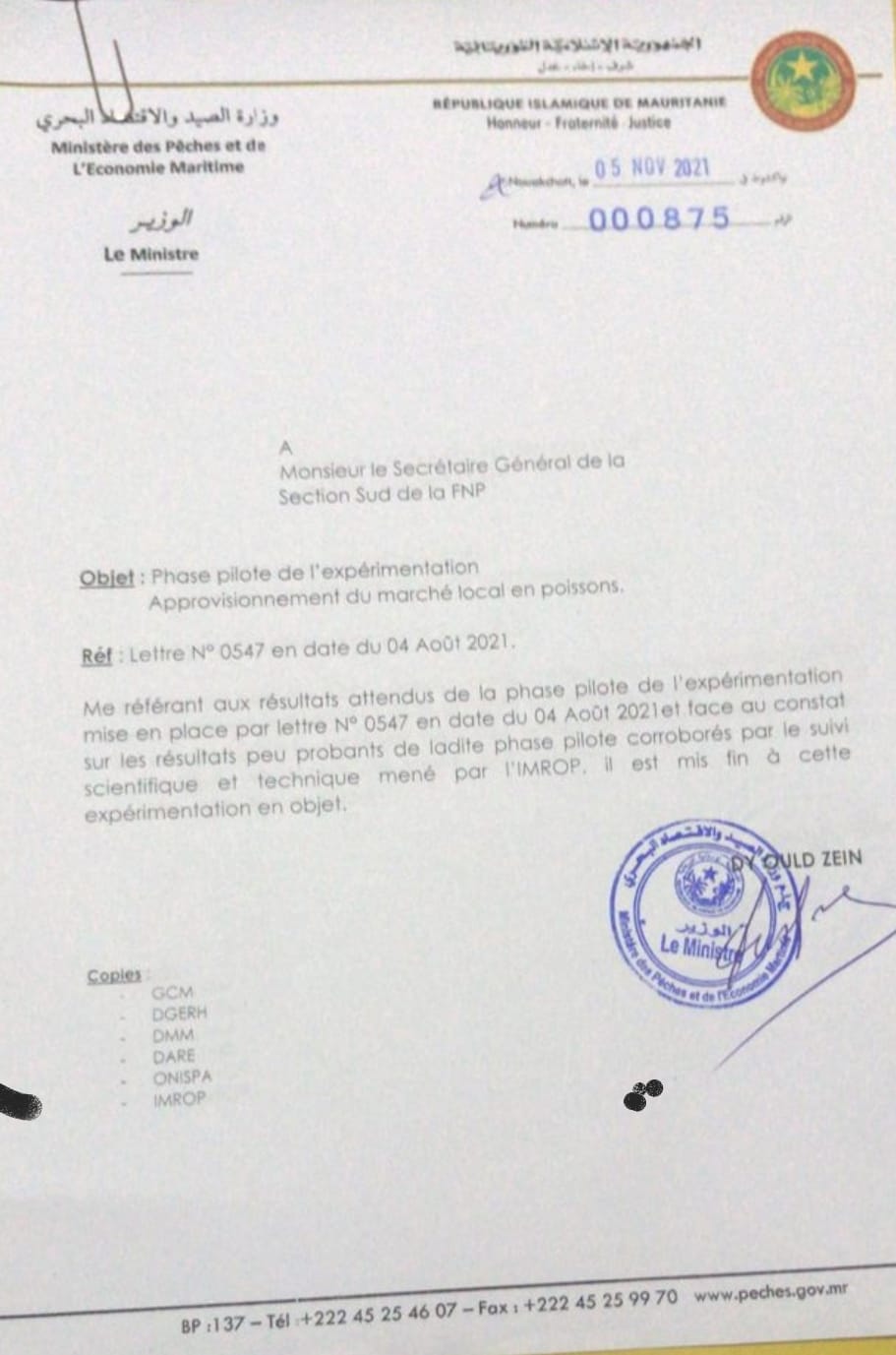
Sandra Kloff, a marine biologist, said that the Habibin Yavuz likely engaged in transshipment on August 29 and September 3, 2021, when it rendezvoused with the Neslisah 1, a refrigerated vessel, for several hours.6 The authorisation contradicted commitments made under the EU-Mauritania Sustainable Fisheries Partnership Agreement, which emphasized sustainable fishing practices.“This is clear theft,” wrote the Mauritanian activist Ali Ben Bakar on Facebook, alongside Global Fishing Watch screenshots that showed the Habibin Yavuz engaging in several transshipments near the marine protected area after its authorization to fish in the area was terminated. “It is the citizens’ resources that are stolen.”7 On November 5, 2021, Mauritania terminated the special authorization.
Atyfen did not respond to a request for comment.8